
What I read and wrote in 2024 (and what's to come)
And a thank you

Thanks to all the comms pros, colleagues, and friends who’ve tuned in over the last few months to explore how messages can move and motivate people. Writing this newsletter has become a space for me to dig into principles and research about how people process, share, and act on information — and I hope it’s done the same for you.1
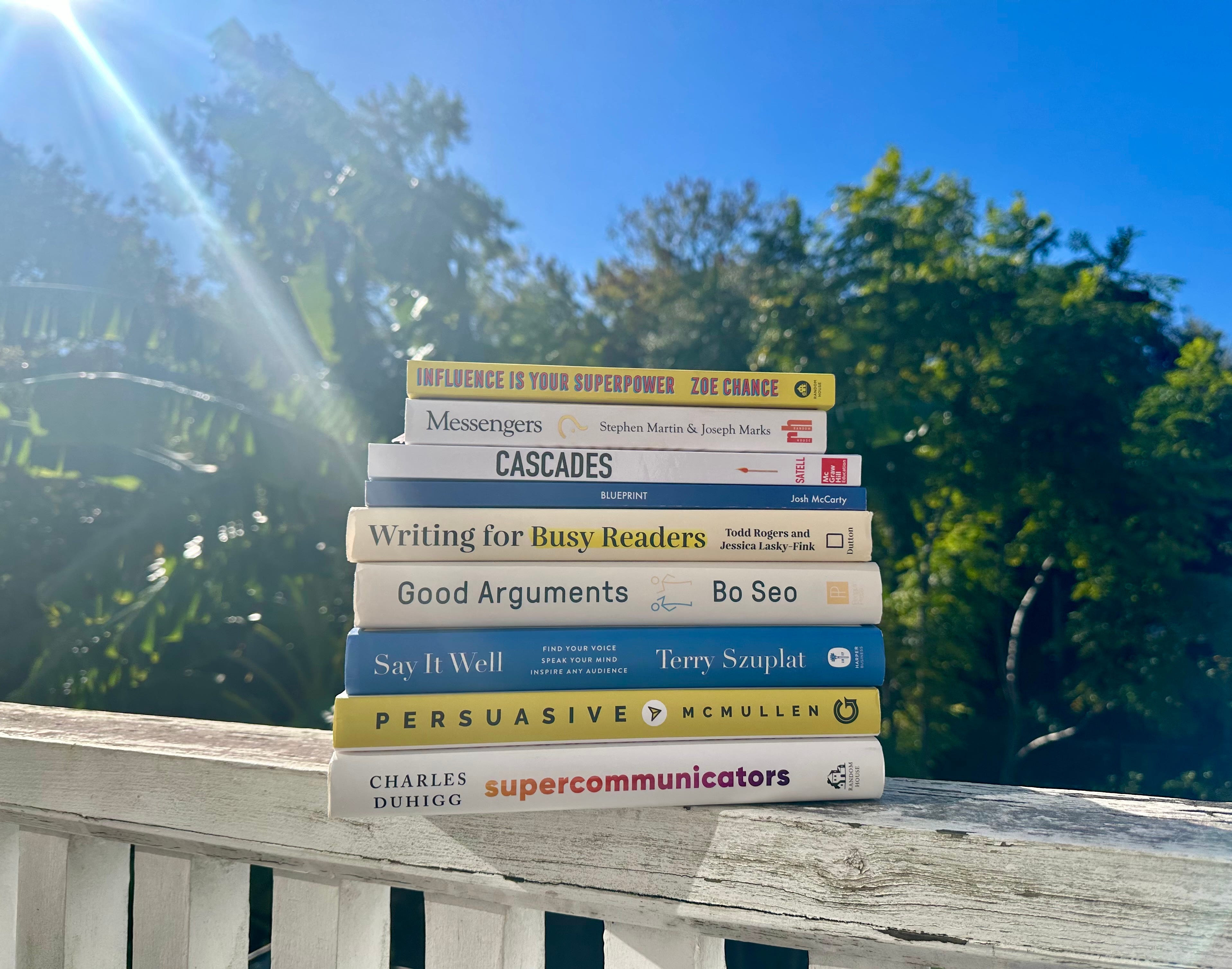
In this end-of-year edition of Just the Good Points, I wanted to share some standout books about communications, influence, and messaging that helped shape my thinking in 2024. Also, ICYMI, I dropped in a recap of the key topics we explored so far and a preview of what's coming in early 2025.
What I Read
I may have over-dialed on comms books this year.2 My algorithm kept putting interesting things in front of me. Zoe Chance’s Influence Is Your Superpower and Charles Duhigg's Supercommunicators both had good insights (and great links to further comms research) into how we connect and convince. Messengers and Cascades explored how information and ideas spread. Writing for Busy Readers3 and Bo Seo's Good Arguments had frameworks for clearer writing and stronger reasoning.
Two books from Obama veterans - Terry Szuplat's Say It Well and Marianne McMullen's Persuasive offered behind-the-scenes lessons from high-stakes communications.
What I Wrote
Reading those helped inform my book, Blueprint, which draws on my experience to help education communicators navigate citywide initiatives.4
In this space, we’ve looked at when yard signs can be an effective tool, why the "myth vs. fact" format often falls short, and how to counter misinformation effectively. We've also dug into writing techniques like the "And, But, Therefore" framework and discussed how acknowledging small vulnerabilities can actually strengthen your message. If you've found these insights helpful, please share this newsletter with other communications professionals who might benefit.
What I’m Working On
In the first few months of the new year, I plan to dig into what makes trusted messengers effective and how to identify and support them. I’m also going to try to put something together around comms evaluation/KPI’s that go beyond output goals but also don’t require giant polling budgets. We'll also get tactical with best practices for subject lines and talking headers that grab attention while staying true to your message.
And for everyone who's ever stared at a blank page, I'll share one approach to jumpstarting the writing process and how you can bring in AI as your thought partner when you're a communications team of one.
Thanks
It means a great deal to me that you’d read this newsletter. I love talking and writing about this stuff, and I very much hope you find it interesting, helpful, and short.
If it has, I’d be grateful if you could share it with your other comms colleagues.
Beyond comms books, I’d recommend Slow Productivity, Demon of Unrest, and Mickey 7.
I wrote about this previously in Keeping the Reader’s Perspective in Mind
If you’d like a copy, send me an email: josh@thegoodpoints.org